
How did you hear about us? Options for apps (list, examples and setup)
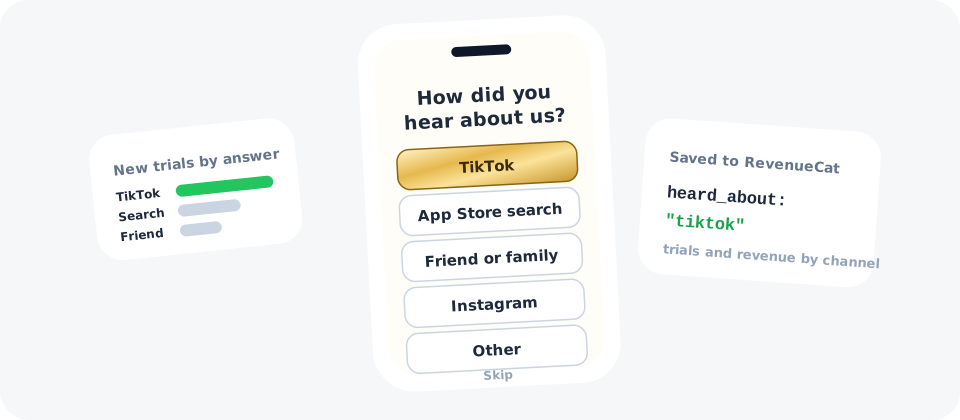
"How did you hear about us?" is the cheapest attribution tool you can add to an app. It takes an afternoon to build, it doesn't need an SDK or tracking links, and it often reveals channels your analytics can't see, like a friend's recommendation or a TikTok someone watched last week.
But the options you offer decide whether the answers are useful. Here is a list built for mobile apps, plus how to ask the question and where to store the answers.
The short list (copy this)
For most consumer apps, these eight options cover nearly every answer:
- TikTok
- YouTube
- App Store / Google Play search
- Google search
- Friend or family
- Reddit or a forum
- Other (with a short text box)
If you actively invest in a channel, give it its own option. If you don't, leave it out and let it land in "Other".
Options by app type
| App type | Add these options | Why |
|---|---|---|
| Fitness, health | Gym or trainer, Apple Health / Google Fit | Recommendations happen offline |
| Productivity, study | Teacher or school, Newsletter, Product Hunt | Word of mouth in classes and teams |
| Games | Twitch or a streamer, Discord, Ad in another game | Common discovery paths for games |
| Finance | Podcast, News article, Bank or employer | Trust-heavy channels |
| Couples, social | Partner sent me an invite | Invites are often the main channel |
"How did you hear about us?" examples that work
Short and friendly:
Quick one: how did you find us?
For apps with creators or influencers:
Where did you first see us? (TikTok, Instagram, a friend...)
For apps with invites:
Did someone invite you, or did you find us yourself?
Keep the question to one line. Put the options as large tappable buttons, not a dropdown.
7 rules for better answers
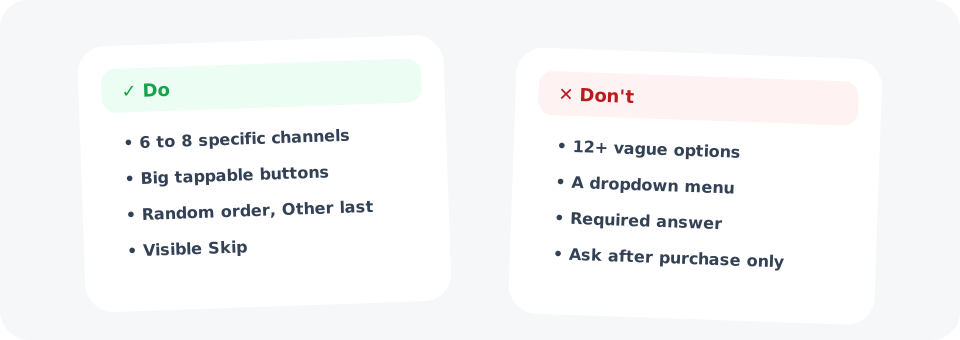
- Keep it to 6 to 8 options. Long lists make people tap the first thing that looks close.
- Randomize the order, but keep "Other" last. The first option always gets picked more.
- Use the names people actually say. "TikTok", not "Short-form video platform".
- Ask once, during onboarding. After the first value moment, before the paywall.
- Make it skippable. Forced questions get junk answers.
- Add a text box only for "Other". Then read it every week. New channels show up there first.
- Separate "search" from where they first saw you. Many people see you on TikTok, then search the App Store. If you can, ask "Where did you first hear about us?" so search doesn't take the credit.
Save the answer to RevenueCat
The answer is only useful if you can connect it to trials and revenue. If you use RevenueCat, save it as a customer attribute. Then you can filter and segment charts by it.
Swift (iOS):
import RevenueCat

func saveHeardAbout(_ answer: String) {
    Purchases.shared.attribution.setAttributes([
        "heard_about": answer
    ])
}
Kotlin (Android):
import com.revenuecat.purchases.Purchases

fun saveHeardAbout(answer: String) {
    Purchases.sharedInstance.setAttributes(mapOf("heard_about" to answer))
}
Use a short, stable key like heard_about, and save fixed values (tiktok, app_store_search, friend) instead of the button label, so renaming a button later doesn't split your data. Store the "Other" text in a second attribute.
RevenueCat's charts can be filtered and segmented by custom attributes, so after a few weeks you can compare new trials and revenue for "TikTok" versus "Friend" versus "App Store search".
Self-reported answers vs. timing data
Survey answers have blind spots:
- People remember the last thing they saw, not the first.
- "App Store search" gets credit for installs that started with a TikTok.
- Many people skip the question.
That's why it works best alongside timing data: comparing installs and trials in the hours after each post with a normal day. If 30% of new users say TikTok, and installs rise after your TikToks go out, you can trust the channel. If they disagree, dig in.
This combination, survey answers plus post-by-post timing, is exactly what Postnomics does for you automatically.
Common mistakes
- Too many options. Twelve choices means random answers.
- Asking at the very first screen. Before people see any value, they skip.
- Asking only after purchase. You miss everyone who didn't pay, which hides channels that bring installs but not buyers.
- Never reading "Other". That's where new channels appear first.
- Changing the options often. You can't compare weeks if the list keeps changing.
Frequently asked questions
What are good "How did you hear about us?" options for an app?
TikTok, Instagram, YouTube, App Store search, Google search, Friend or family, Reddit or forums, and Other with a text box. Add a specific option for any channel you actively invest in.
How many options should a "How did you hear about us?" question have?
Six to eight. Fewer options are faster to answer; more options make people pick the first one that looks close.
Where should I ask "How did you hear about us?" in an app?
During onboarding, after the first value moment but before the paywall. Asking at the very first screen gets more skips; asking after purchase misses people who never pay.
Is "How did you hear about us?" accurate?
It is self-reported, so it is not perfect. People remember the last thing they saw. It works best combined with timing data, such as installs after each post.
Should the question be required?
Make it optional with a visible Skip. Required questions get random answers from people who want to move on.